Finding Your Opening: What Chess Can Teach Us About Personal Style
A favourite outfit and a familiar chess opening have something in common: both offer a starting point without deciding every move. Here is a playful way to think about finding a style that feels like you.
Start with a few combinations you know
Personal style does not have to begin with a completely new wardrobe. Often, the more useful starting point is noticing what you already reach for: trousers that sit comfortably, a knit that layers well or a jacket that makes a simple outfit feel finished. These pieces give you something dependable to build around.
Think of that as your opening. You have a familiar first choice, with room to respond to the day ahead. A soft shirt and straight-leg trousers might be one combination; a favourite dress with a cardigan might be another. The aim is not to repeat the same outfit endlessly, but to recognise the foundations that work for you.
A wardrobe repertoire, rather than a rigid uniform
In chess, a repertoire is a set of openings and responses a player prepares. Chess Openings Mastery’s guide to building a chess opening repertoire recommends keeping the initial selection manageable and expanding it through the positions you actually encounter.
That offers a useful parallel for getting dressed. Instead of collecting unrelated pieces for an imagined life, build a small set of combinations around the days you really have. Perhaps you need a comfortable work outfit, something for an evening out and an easy weekend option. Each can have variations without requiring a separate wardrobe.
This is a creative comparison, not a rule that fashion and chess work in exactly the same way. Your clothes need to serve your comfort, practical needs and taste. A good starting formula should make dressing easier while leaving space for personality.
Let contrast do some of the work
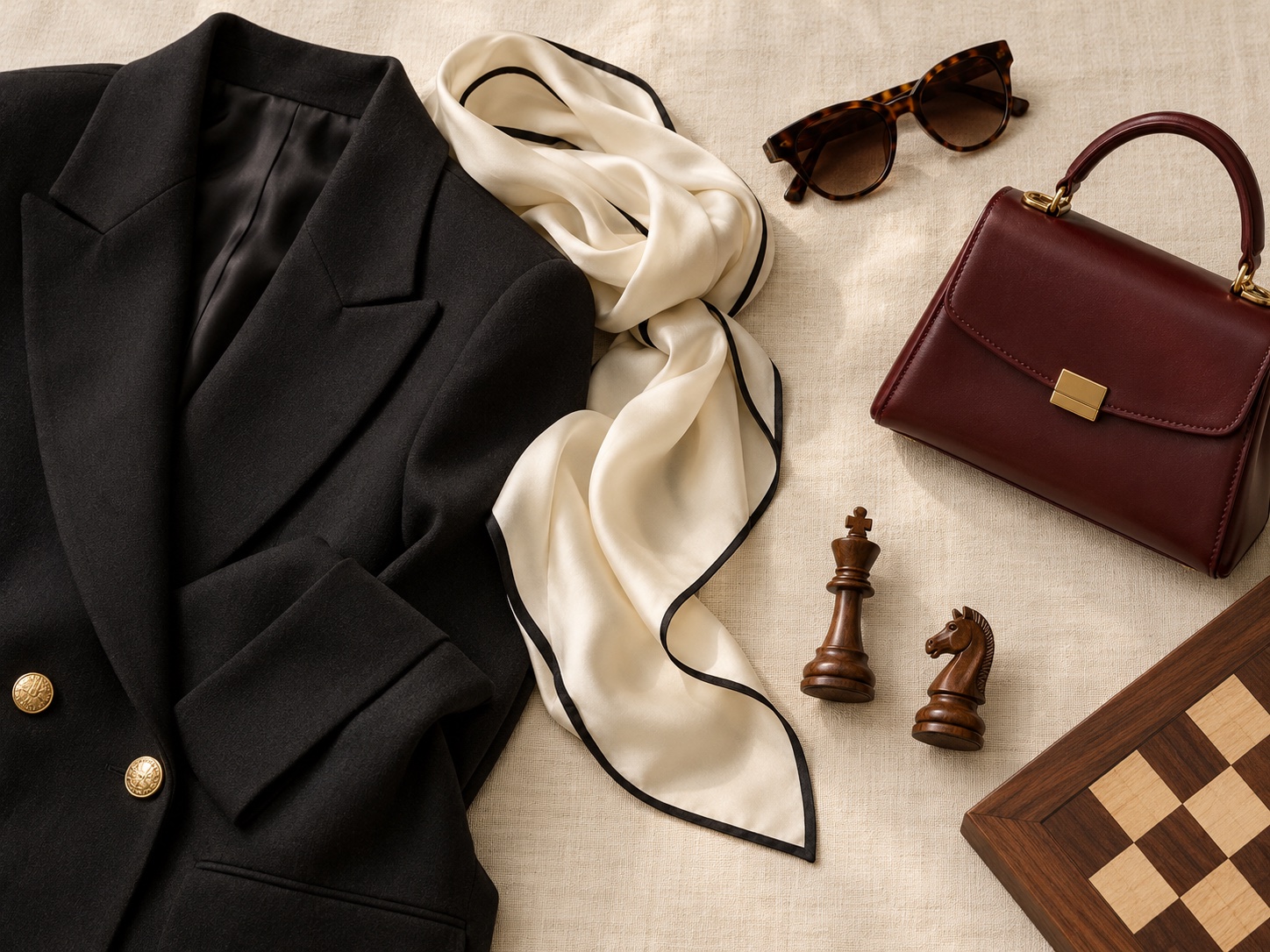
The chessboard suggests an obvious styling idea: contrast. Black and ivory can create a clear, considered combination, but you do not need a head-to-toe checkerboard print to explore it. Try a dark jacket over a light top, or a pale scarf against a charcoal knit.
Contrast can come from texture and shape as well as colour. A smooth blouse beside a textured cardigan, a relaxed shirt with more structured trousers or a soft scarf against a tailored lapel can give an outfit interest. Begin with what is already in your wardrobe and see which pairings feel natural.
If strong contrast feels too sharp, soften it. Navy with cream, chocolate with oat or two shades of grey can give a similar sense of definition. The point is to find a relationship between the pieces, rather than follow a compulsory palette.
Choose a signature detail
Some outfits become recognisable through one small choice: a scarf tied loosely at the neck, a favourite pair of earrings or a bag in a colour you love. That detail can provide continuity across otherwise different looks.
Keep the rest of the outfit simple when you want one element to stand out. A burgundy bag, for example, can be the focal point beside quiet neutrals. If you prefer pattern, try making one patterned piece the starting point and echoing one of its colours elsewhere.
You do not need a fixed signature, and it need not be an expensive accessory. Repeating a shape, a texture or a way of layering can be just as personal. Notice which details you enjoy wearing, rather than choosing them because they appear to say the right thing about you.
Dress for the position you are actually in
A prepared opening does not remove the need to notice what happens on the board. Equally, a favourite outfit formula still needs to suit the weather, the occasion and the way you will spend the day.
Consider movement and comfort before adding the finishing touches. Will you be walking, sitting for a long time or moving between warm and cool spaces? A removable layer and shoes you can comfortably wear may matter more than a perfectly coordinated photograph.
Try the whole combination together, including the outer layer and bag. Sit down, reach forward and walk around. An outfit that works in motion is more useful than one that only looks right while standing still.
Change one thing, then see how it feels
Experimenting is easier when you do not change everything at once. Start with a familiar outfit and alter one element: exchange the jacket, introduce a different scarf or try another way of tucking the shirt. You can then see what that particular change contributes.
A quick outfit photograph or a note can help you remember combinations you enjoyed. Look for useful patterns: perhaps a certain jacket balances several outfits, or a scarf gives an older knit a different feel. Let that experience guide the next combination before deciding that something new is needed.
Your next move can still be your own
The pleasure of personal style is that a reliable starting point can lead somewhere individual. Familiar pieces, considered contrast and a detail you enjoy can give you a wardrobe that feels connected without making every day look identical.
If the chess connection sparks your curiosity, exploring a few openings is another way to enjoy the balance between structure and choice. For your wardrobe, begin closer to home: choose one outfit you already love and give it a thoughtful new variation. That is enough for an opening move.
Editorial notes
Published 27 October 2026 by Admin. The chess repertoire example draws on Chess Openings Mastery’s repertoire guide, reviewed on that date. Fashion parallels and outfit examples are editorial suggestions. Image: original AI-generated fashion-and-chess still life, created for this article; no real product endorsement is implied.